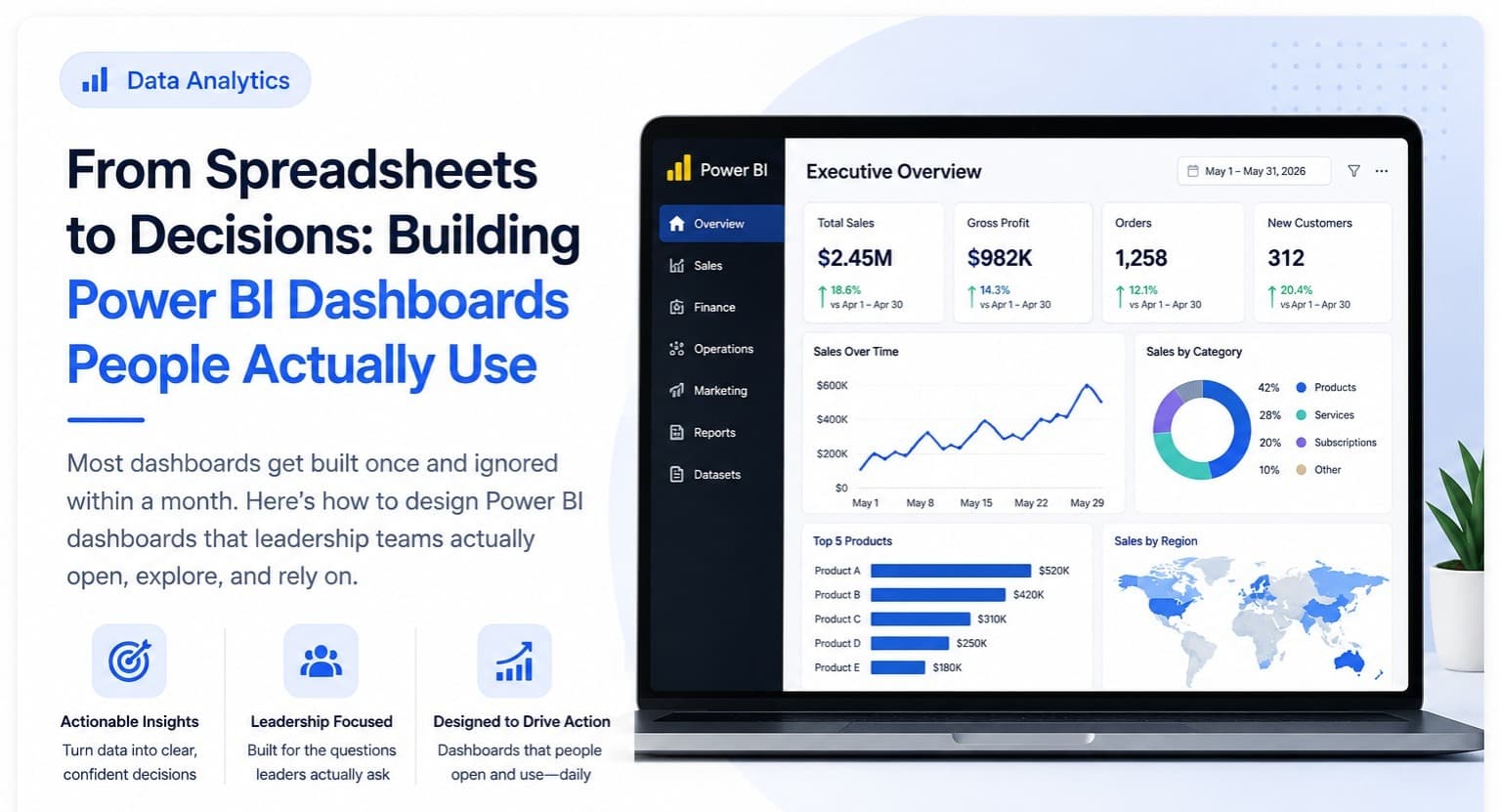
Data analytics is primarily about explaining what already happened and why, using tools like SQL, Excel, and Power BI; data science extends into predicting what will happen next, using statistical modeling and machine learning on top of those same foundational skills. The two overlap heavily in practice and the job titles are used inconsistently across companies, but the core distinction — explaining the past versus predicting the future — is genuinely useful for deciding which path fits you.
What a Data Analyst Typically Does
A data analyst answers concrete, backward-looking business questions: which region underperformed last quarter, what's driving a recent drop in signups, which marketing channel has the best return. The core toolkit is SQL, Excel, Python for more involved cleaning, and Power BI for communicating results — see our Data Analyst Roadmap for the specific learning sequence.
What a Data Scientist Typically Does
A data scientist builds on the same data foundation but extends into statistical modeling and machine learning to answer forward-looking questions: which customers are likely to churn next month, what next quarter's demand will probably look like, which users are the best candidates for a specific offer. This requires everything an analyst knows, plus deeper statistics, machine learning fundamentals, and typically more advanced Python (libraries like scikit-learn) than a pure analytics role needs.
Where the Line Actually Blurs
In practice, especially at small and mid-size companies, one person often does both — a "data analyst" job title that occasionally builds a simple predictive model, or a "data scientist" who spends most of a given week on straightforward reporting and dashboards. Company size and maturity affect this more than the job title does: larger, more data-mature organizations tend to separate the roles cleanly, while smaller ones blend them out of necessity.
Which Path Should You Choose?
If the idea of digging into "why did this happen" and communicating a clear answer to a business question sounds more appealing, start with analytics — it also has a shorter, more predictable path to a first job, since the skill bar (SQL, Excel, Power BI) is more standardized and widely demanded. If you're specifically drawn to prediction and modeling and are comfortable with a longer runway (statistics and machine learning take longer to build real competence in), data science is the better long-term target — though starting with analytics fundamentals first is still the right sequence either way, since every data science role assumes solid analytics skills underneath it.
Our online Data Analytics course is built around the analytics path specifically — SQL, Excel, Python, and Power BI with real projects — and is also the right starting point if data science is your eventual goal, since it covers the foundation every data scientist needs regardless of which direction you take afterward.