A data analyst needs both technical skills (SQL, Excel, Python, a BI tool like Power BI, and statistics fundamentals) and non-technical skills (communicating findings clearly, understanding the actual business context behind a question, and structured problem-solving) — and it's the second category that most often separates a good analyst from a great one, since the technical bar to entry is more standardized across candidates.
Technical Skills
- SQL — the most universally required skill, for pulling data out of real databases.
- Excel — still a genuinely important daily tool in a large share of real businesses, not just a beginner stepping stone.
- Python (pandas specifically) — for data too large or messy for Excel, and for repeatable, automated analysis.
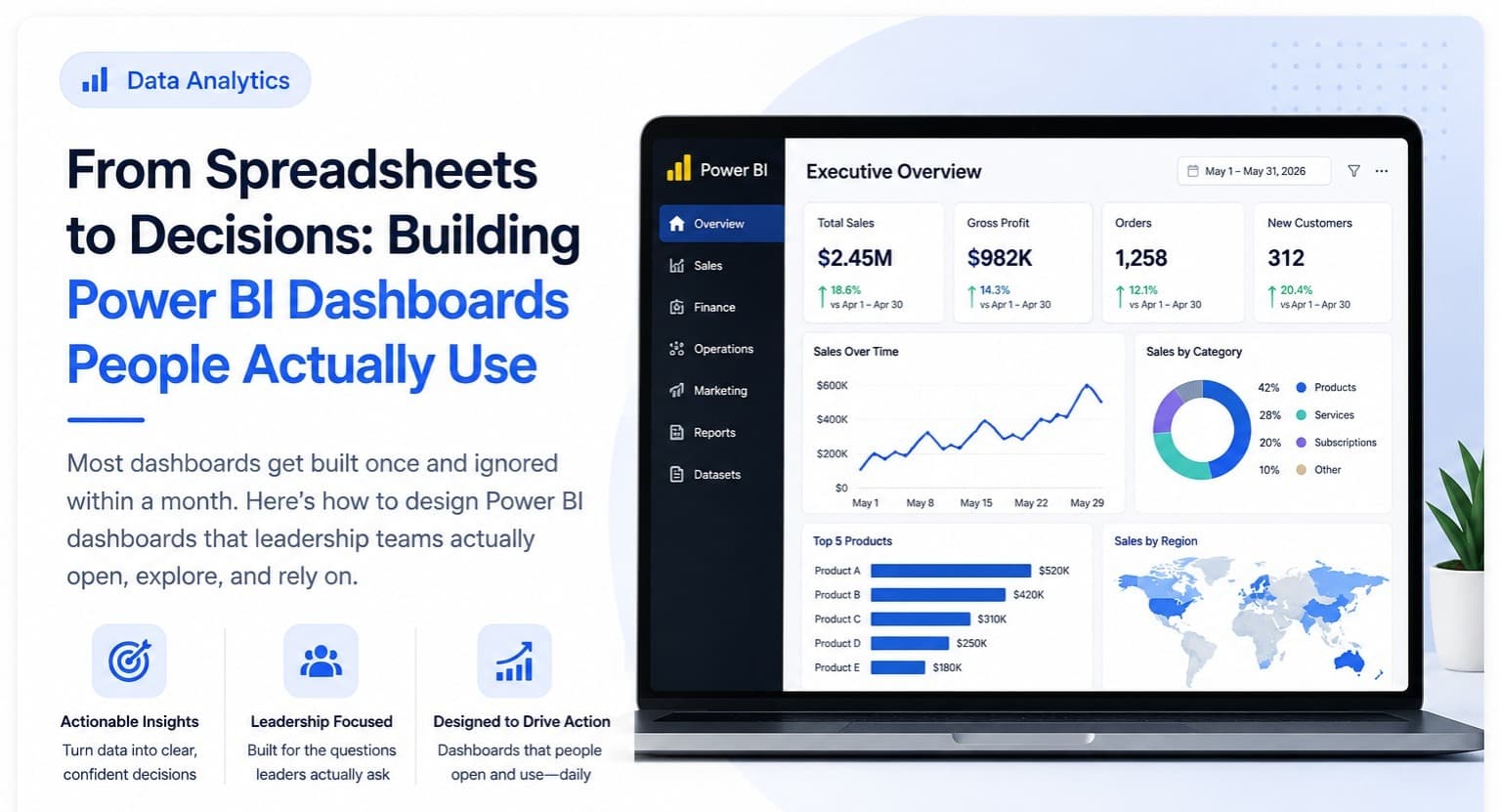
- Power BI or a similar BI tool — for turning analysis into dashboards decision-makers actually use.
- Basic statistics — understanding mean/median/outliers, correlation versus causation, and sample size well enough to avoid drawing false conclusions from noisy data.
Non-Technical Skills (Often Underrated)
- Communicating findings to a non-technical audience — translating a complex query result into a plain business statement ("this specific change would recover an estimated $40k in lost monthly revenue") is a distinct skill from the analysis itself, and often the one that determines whether your work actually gets acted on.
- Business context and curiosity — understanding why a question matters to the business asking it, not just answering the literal question asked. A stakeholder who asks "why did signups drop" often actually wants to know what to do about it, not just a root-cause explanation.
- Structured problem-solving — breaking an ambiguous question ("why are sales down") into testable, specific sub-questions rather than guessing at one explanation — the same skill tested directly in analyst interviews.
- Attention to detail — a single wrong JOIN or an off-by-one date filter can silently produce a confidently wrong answer; the habit of sanity-checking results against what you'd realistically expect is what catches this before it reaches a decision-maker.
How These Skills Actually Get Built
Technical skills are built through deliberate practice on realistic (not toy) datasets — see our Data Analyst Roadmap for a specific sequence. Non-technical skills are built more slowly, through actually presenting findings, defending decisions under questioning, and getting feedback on projects — which is why project-based learning with real feedback (not just tutorial-following) matters as much for the "soft" skills as the technical ones. Our online Data Analytics course is structured around real projects and includes career-readiness support specifically because both categories of skill need deliberate practice, not just the technical half.