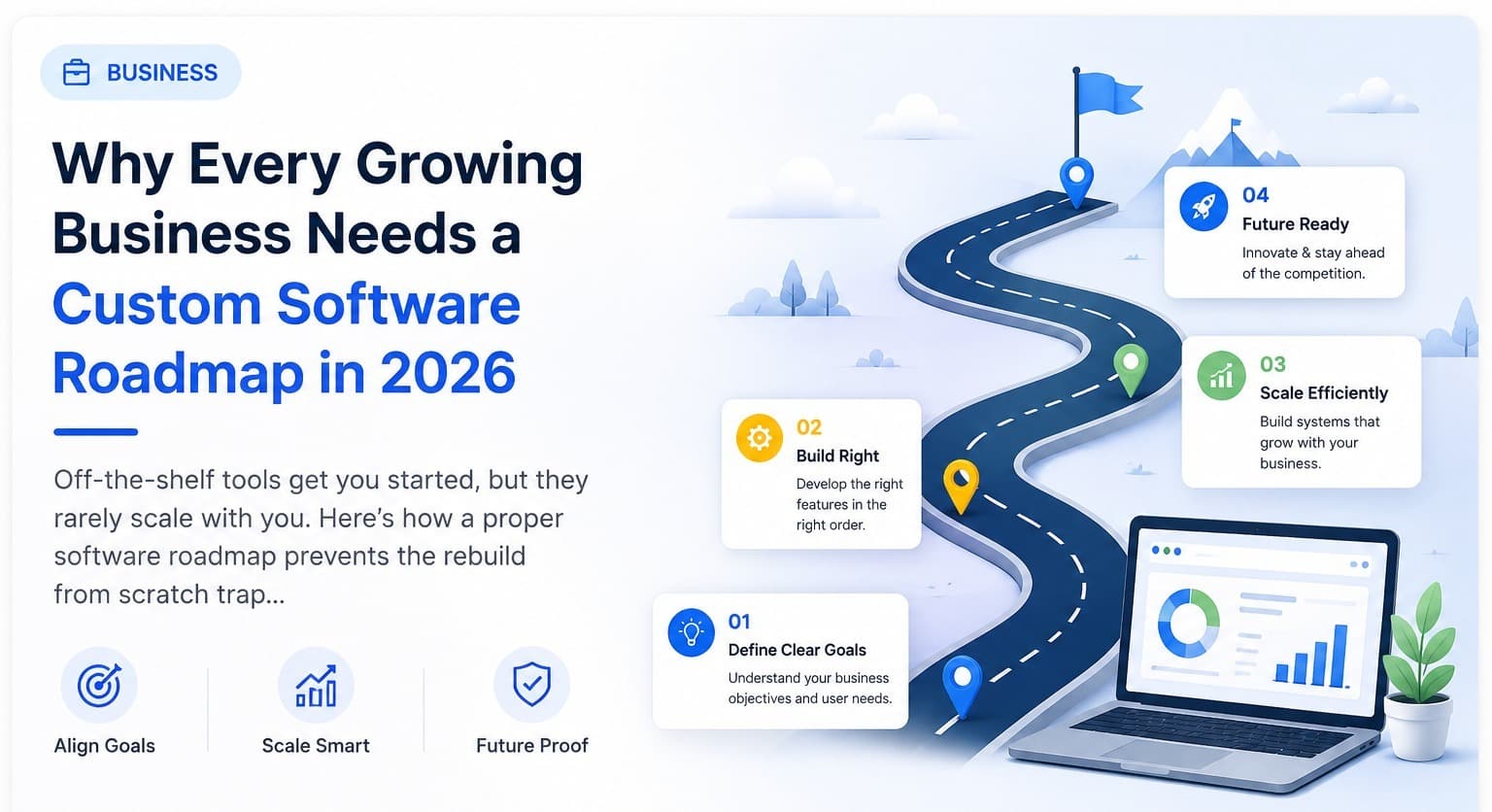
Every conversation about custom web app development eventually arrives at the same honest question from the client: "why wouldn't we just use an off-the-shelf tool instead of paying you to build this from scratch." It's a fair question, and the fair answer is: for a genuine majority of business needs, off-the-shelf software is the right call, and we'll say so directly rather than push a custom build nobody needs. The interesting part of the conversation is figuring out exactly where that stops being true.
Off-the-shelf software wins decisively when your process matches what the software assumes about how a business like yours operates. A generic CRM works well for a generic sales process. A generic inventory tool works well if your inventory logic is genuinely standard. The moment you're paying for a feature you'll never use, or working around a limitation by building an awkward manual process on the side, you've found the edge of what that tool was built for — and every manual workaround is a hidden cost that doesn't show up on the software's price tag but shows up in someone's time every single week.
The tipping point toward custom development is rarely about a single missing feature — it's about accumulation. One workaround is an inconvenience. Five workarounds, each consuming an hour a week across different people, is genuinely more expensive over a year than a custom build would have cost, it's just a cost that's distributed and invisible rather than a single line item someone has to approve. We ask clients to actually total up the hours spent on manual workarounds around their current tools before deciding — the number is almost always larger than they expected, and it's the honest basis for a build-versus-buy decision, not a hunch.
The other place custom development earns its cost is competitive differentiation. If the exact way your business handles quoting, scheduling, or fulfillment is genuinely part of what makes you better than competitors, running that process through a generic tool that every competitor can also buy means you're not actually differentiating on it — you're just executing the same process everyone else has access to, slightly differently. A custom application built specifically around your genuine advantage protects that advantage instead of commoditizing it.
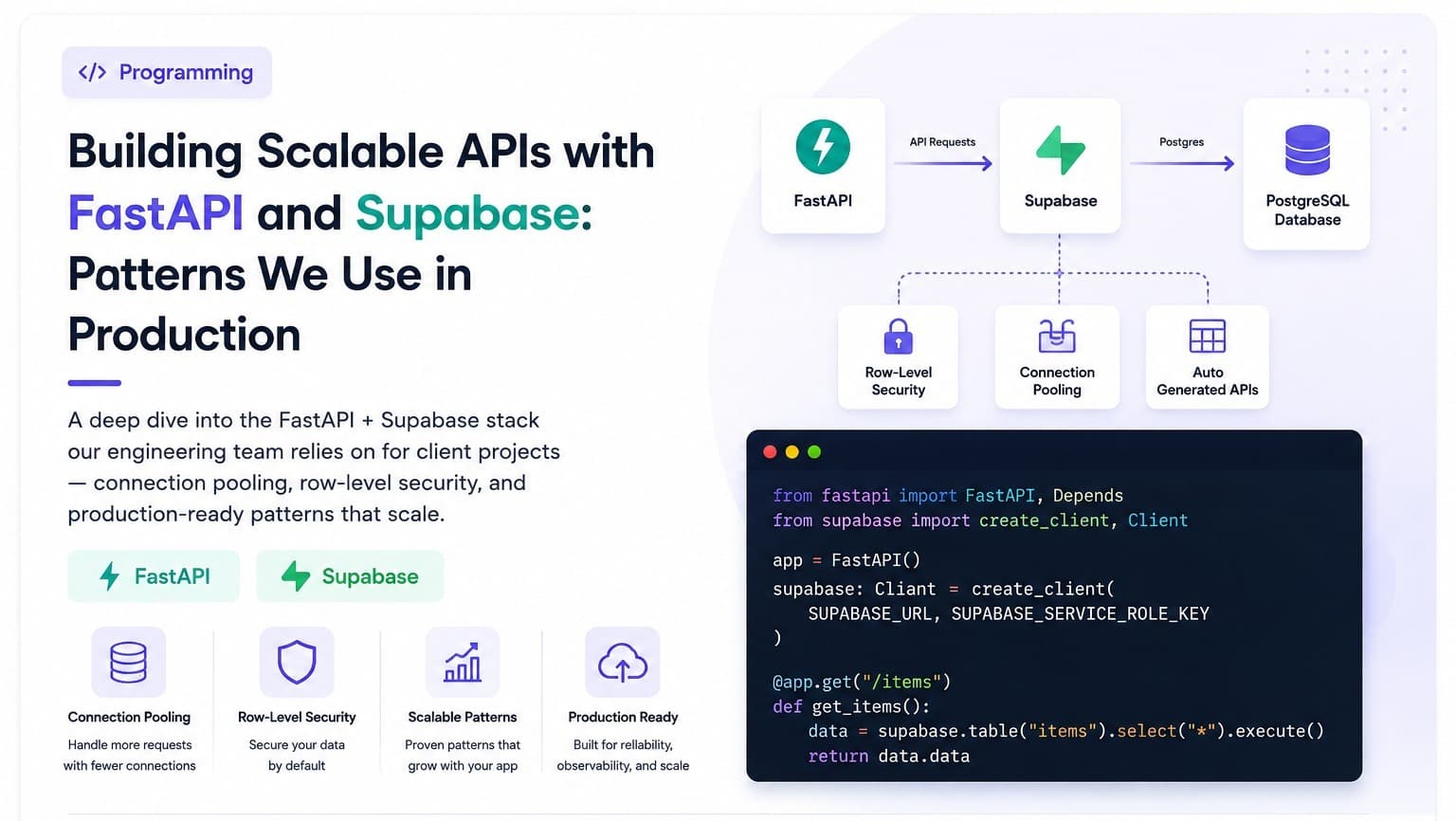
On the technical side, when we do build custom, our default stance is API-first architecture from day one — every piece of business logic exposed through a clean API, whether the initial client is a web dashboard, a mobile app, or an internal tool, because the mobile app or third-party integration you don't need today is very likely one you'll need in eighteen months, and retrofitting an API onto software that wasn't built with one is a much bigger job than building it in from the start. We also default to boring, well-supported technology over whatever's newest and most exciting, because a custom application needs to still be maintainable in five years by whichever developer inherits it, not just impressive in a demo the week it launches.
The honest framework, in short: total up your real workaround cost, ask whether your process is genuinely differentiating or genuinely standard, and build custom only when the answer to both points the same direction. Get that assessment right, and custom development stops being a leap of faith — it becomes the version of "buy versus build" that any well-run finance team would recognize as a straightforward ROI calculation.