Switching a company's entire email, document, and chat stack is not a decision anyone makes lightly, and it shouldn't be — a bad migration means lost email history, confused clients, and a week of "wait, where did that file go" from every department at once. So when clients ask us whether Zoho Workplace is worth moving to from Google Workspace or Microsoft 365, we don't lead with a sales pitch. We lead with what actually changes, because that's what the decision should be based on.
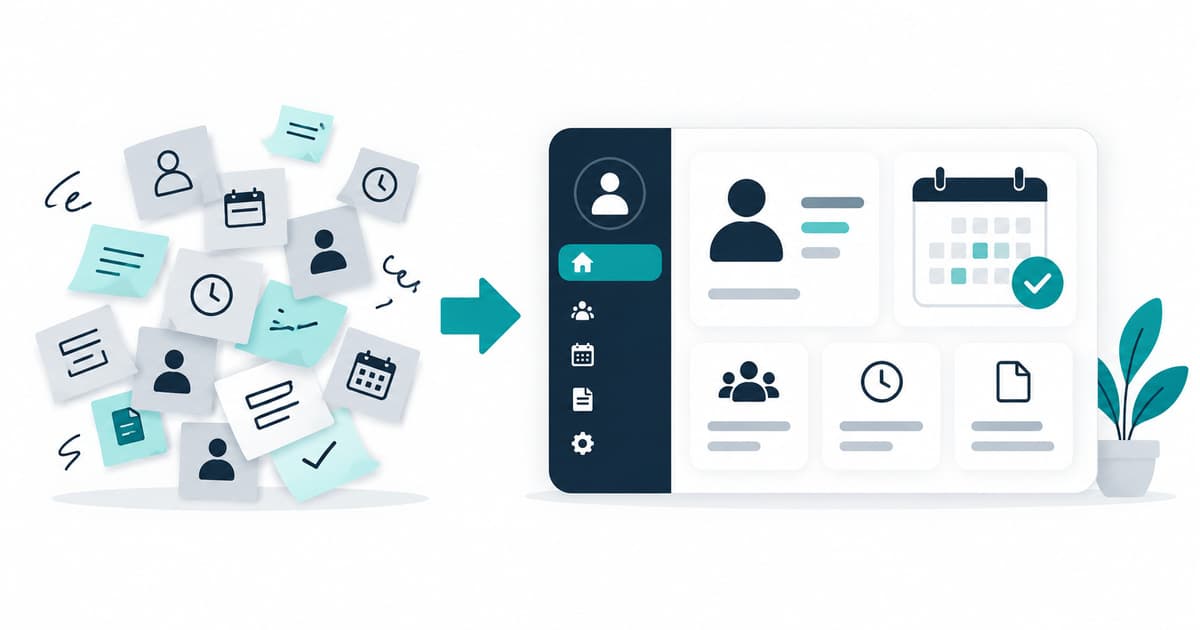
The honest answer is: it depends entirely on how deep you already are into the Zoho ecosystem elsewhere. If your CRM, HR, and finance tools are already Zoho, Workplace's real advantage isn't email or docs in isolation — it's that Cliq (chat), WorkDrive (file storage), and Mail all reference the same user directory and permission model as the rest of your Zoho stack, so a new hire gets access to everything in one provisioning step instead of five separate account setups across disconnected platforms. That single-pane-of-glass administration is the actual reason to switch, not because Zoho's individual apps are dramatically better than Google's or Microsoft's on a feature-by-feature basis — in most cases, they're comparably good, not categorically superior.
Where we've seen genuine wins: cost, particularly at scale, since Workplace bundles pricing more aggressively than the equivalent tier of Google or Microsoft's offerings once you're past a handful of seats. And for businesses that are Zoho-native everywhere else, the reduction in "which system actually owns this document" confusion is real — WorkDrive links directly into CRM records and Projects tasks in a way that feels native rather than bolted on, because it is native.
Where we push back on clients considering the switch purely for cost: if your team has years of institutional muscle memory in Google Docs' collaborative editing or Outlook's calendar habits, the migration cost isn't just technical — it's weeks of reduced productivity while people relearn muscle memory for tools they use dozens of times a day. We only recommend the switch when there's a clear structural reason (ecosystem consolidation, cost at meaningful scale, or a specific compliance/data-residency requirement Workplace satisfies better), not simply because a sales conversation made it sound appealing.
The migration itself, done properly, is a project with real technical steps — email history migration with correct threading, calendar migration without losing recurring event data, and a communication plan so the whole team knows what changes on day one rather than discovering it live. Rushed migrations are where the horror stories come from. If you're evaluating this switch, the question worth answering first isn't "which platform has better features" — it's "how much of my operational stack is already Zoho, and does consolidating actually save meaningful time, or am I just chasing a lower invoice." Answer that honestly, and the right call becomes a lot clearer.